
African American hair transplant: a surgeon who knows afro-textured geometry.
Curly and coily hair curves beneath the skin, which makes extraction unforgiving and the wrong technique costly. Our team has extensive experience harvesting and placing Afro-textured grafts, planned and performed by a physician. From $1.70 per graft, at an INVIMA-licensed clinic in Medellín.
Hear it from our patients.
Two Colombia Care patients on their Afro-textured hair restoration, in their own words.
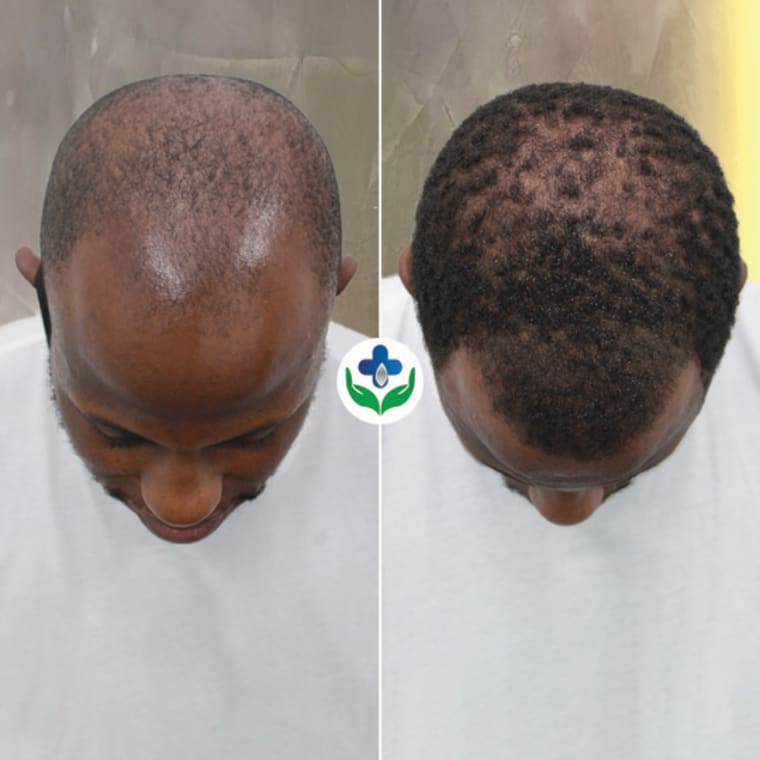
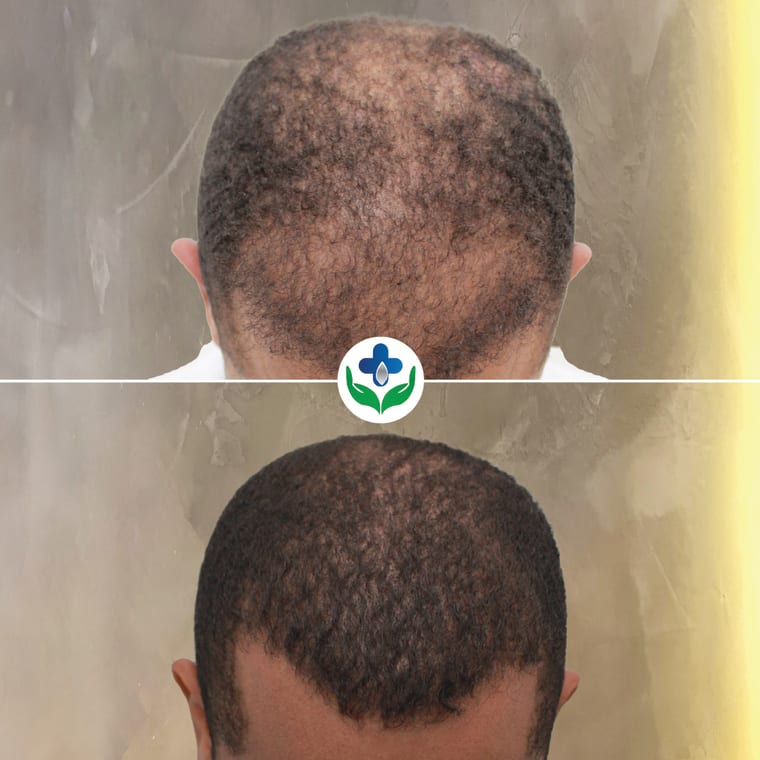
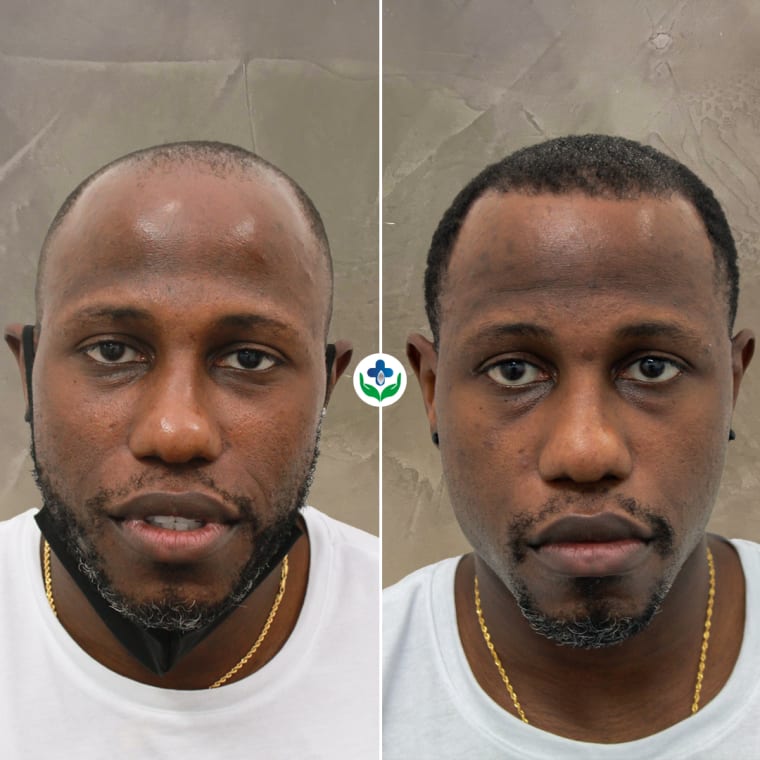
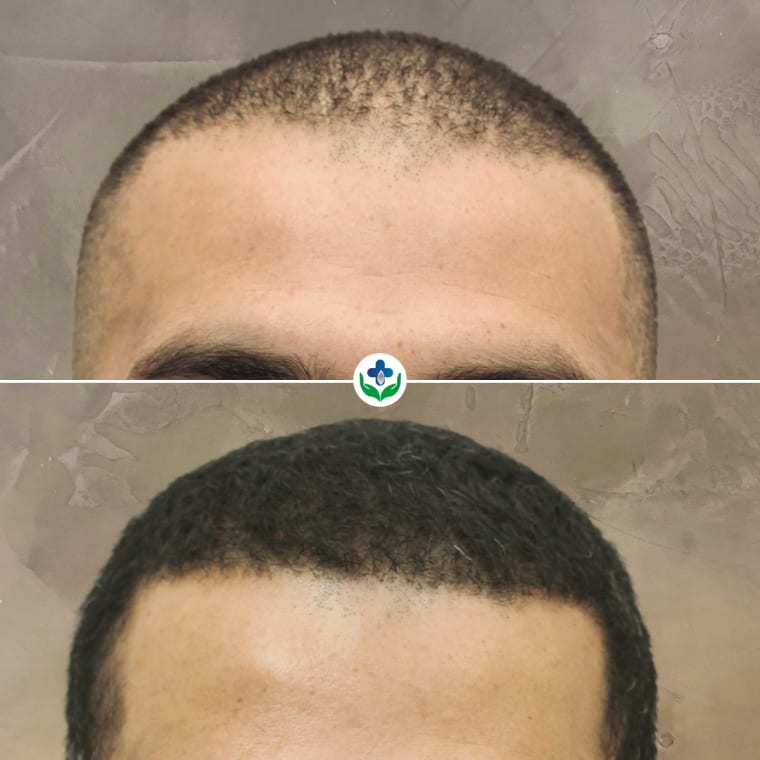
Afro-textured results, real patients.
Real Colombia Care cases on curly, coily hair, photographed at the clinic. Each one planned and placed by a physician experienced with the texture.
The curl continues under the skin.
With straight hair, the follicle below the surface roughly follows the hair above it. With curly, coily hair it keeps curving, so a surgeon who extracts as if it were straight will cut through follicles and waste grafts. Experience with Afro-textured hair is not optional; it is the whole job.
Harvested for the curl
The donor area is harvested with the follicle's curve in mind, protecting graft survival where an inexperienced hand transects and loses them.
Density that suits the texture
Coily hair gives excellent coverage per graft. The plan uses that to your advantage, with angles set for the way the hair coils and lies.
Designed for your features
Hairline shape and density are mapped to your face and the look you want, then refined with you before any follicle is placed.
Transparent, per-graft pricing.
You pay per graft, quoted up front after your consultation, with no surprises on the day. A typical case runs a fraction of the US, Canadian, or UK price for the same work, with the same medical-grade materials.
Included in your trip
Arranged by you
Who it is for
It suits anyone with curly or coily hair looking to restore a receded hairline, thinning crown, or temples, as well as those addressing traction loss from tight or protective styles, which is a common and very treatable cause. A healthy donor area and good general health are the main requirements.
- Receded hairline, thinning crown, or temple loss
- Traction loss from tight or protective styles
- Scarring or past injury, including from prior procedures
- A healthy donor area and good general health
A consultation confirms candidacy and, importantly, that your case is in experienced hands for the texture. If a transplant is not the right step yet, the physician will say so on the call.

A real clinic, not a back room.
Your procedure happens in our INVIMA-licensed clinic in El Poblado, Medellín, calm, modern, and built for international patients. You can see more of the space on our about page.
How your transplant works, start to finish.
A short visit to Medellín, then regrowth that builds over about a year. The same physician is with you from the first video call onward.
Free virtual consultation
Send a few photos of your scalp. A physician reviews them, estimates your graft count, and plans the hairline and density for your texture.
Your plan & trip
We confirm graft count, technique, and an up-front price, then help you pick dates. The concierge helps with hotel guidance, and your driver on procedure day is included.
1–2 days in Medellín
The procedure is outpatient and done under local anesthetic. You are awake, comfortable, and walk out the same day.
12-month regrowth
Transplanted hair sheds, then regrows from around month three. Density builds through month twelve, with WhatsApp check-ins the whole way.
What recovery actually looks like.
The honest version, so there are no surprises. Most patients are presentable within days and back to normal life quickly; the visible result then builds over the year.
First 48 hours
Mild soreness and tightness, managed with simple medication. You rest, keep the area clean, and sleep slightly elevated. You can fly home after this point.
First week
Tiny scabs form around each graft and the donor area settles. Many patients return to desk work within a few days; we guide you on washing and care by WhatsApp.
Weeks 2 to 4
Scabs are gone and the transplanted hairs shed, this is normal and expected, not a setback. The scalp looks much like it did before, while the roots settle in.
Months 3 to 12
New hair starts growing from around month three and thickens steadily. Most of the result is visible by month eight, with full density through month twelve.
A look at where you'll be treated.
Calm, modern, intentionally not clinical-feeling. Four of the spaces you'll move through during a typical visit.



Afro-textured transplants, answered.
Is curly hair harder to transplant?
It demands more of the surgeon, because the follicle curves under the skin and is easy to transect if extracted as though it were straight. In experienced hands that texture is an advantage: coily hair gives excellent coverage per graft.
Do you have experience with my hair type?
Yes. Our team has extensive experience extracting and placing Afro-textured grafts, which is exactly why technique on this page is the focus. The consultation is also your chance to confirm that for yourself.
Can it help traction loss from braids or locs?
Often, yes. Traction loss at the hairline and temples from tight or protective styles is common and frequently treatable, provided the donor area is healthy. The physician assesses this in the consultation.
Is the result permanent?
Yes. The transplanted follicles come from a part of the scalp resistant to pattern loss, so once they regrow they behave like the donor hair they came from.
Your treatment plan, the same day.
Leave your name, your WhatsApp and three photos. A surgeon reviews them personally and you get your candidacy, the recommended technique and your all-in price. Free, no obligation.
Got it, your case is in.
Your reference is
Continue on WhatsAppThat's where your plan arrives. We can also message you first if you prefer.